

Why Headless Commerce Is the Secret Sauce for Real‑Time Personalization
When I first heard the term “headless” I imagined a decapitated dinosaur trying to sprint a marathon. It sounded absurd, yet the reality is that headless commerce has become the most agile way to deliver instant, context‑aware experiences that modern shoppers demand. In my ten‑plus years building ecommerce platforms, I’ve watched monoliths crumble under the weight of endless customizations, and I’ve watched headless architectures rise like a phoenix—light, flexible, and ready to integrate with whatever the next wave of personalization technology throws at it.
The Core Premise: Decouple, Then Conquer
The classic ecommerce stack bundles the frontend presentation layer with the backend commerce engine. That coupling creates a single point of failure: every visual change, every new checkout flow, every A/B test forces you to touch the core commerce code. The result? Longer release cycles, higher risk, and a stifled ability to react to real‑time shopper signals.
Headless commerce flips the script. By exposing your commerce capabilities through API‑first services, you free the “head” (the UI) to evolve independently. The back office stays stable, while the front end can be rebuilt, swapped, or experimented on at lightning speed. It’s not just a technical refactor; it’s a strategic shift from static experiences to dynamic, data‑driven journeys.
Real‑Time Personalization Needs More Than a Pretty UI
Personalization is no longer a “nice‑to‑have” feature. It’s a business imperative. Shoppers expect product recommendations that reflect their browsing history within seconds, price alerts that adapt to market fluctuations, and content that resonates with their location, device, and even mood. To meet those expectations, you need two things:
- Speed of data delivery: The moment a shopper clicks, you must query inventory, pricing, and behavioral signals, then render a response in under 200 ms.
- Orchestrated content delivery: The UI must be able to stitch together product listings, reviews, videos, and dynamic offers without a full page reload.
Traditional monoliths choke under this load because the UI is tightly coupled to the same database tables that handle order processing and inventory. Headless separates the concerns, allowing a dedicated personalization engine to consume the same commerce APIs and return context‑specific payloads directly to the front end.
Building the Personalization Pipeline on a Headless Stack
Let’s break down the pipeline into three layers:
1. Data Capture & Enrichment
Every interaction—search query, product view, cart add—is a data point. With a headless approach, you can pipe these events straight into a real‑time data lake or stream processing platform (think Kafka, Kinesis, or an event‑sourced microservice). Enrich the raw events with third‑party signals (weather APIs, social sentiment, location services) and store them in a fast‑access cache.
2. Decision Engine
This is where the magic happens. A machine‑learning model, a rules‑based engine, or a hybrid solution evaluates the enriched event stream and decides what to surface next: a product recommendation, a dynamic discount, or a personalized banner. Because the decision engine talks to the commerce APIs, it can verify inventory, apply promotions, and respect regional pricing—all in real time.
3. Front‑End Delivery
The front end, whether it’s a React SPA, a Vue.js PWA, or a native mobile app, pulls the personalized payload via the same headless API layer that powers your catalog and checkout. Since the UI is decoupled, you can render a different component tree for each shopper without redeploying the backend.
Notice the symmetry: each layer is independent, yet all share a common contract—your commerce API. That contract is the glue that ensures consistency across experiences while still giving you the freedom to innovate at the edge.
Why Most Teams Still Stumble
Even with a clear architectural blueprint, many organisations falter for three common reasons:
- Over‑engineering the API layer. Teams often build a monolithic “API gateway” that mirrors the monolith’s complexity. The result is an API that’s as rigid as the old system. Instead, focus on domain‑driven services that expose just the capabilities you need for personalization.
- Neglecting content governance. Personalized experiences are only as good as the content feeding them. Without a headless CMS or a content mesh, marketers end up stuck in spreadsheets, manually updating JSON files, leading to errors and brand inconsistency.
- Failing to align on data ownership. When product data lives in the commerce engine, but personalization data lives in an analytics warehouse, you end up with “data silos”. A clear single source of truth strategy—often anchored by a design system—prevents mismatched UI states.
Practical Steps to Turn Headless into a Personalization Powerhouse
Below is a checklist I use when converting a legacy shop to a headless, personalization‑ready platform.
- Audit existing APIs. Identify which endpoints are truly needed for front‑end rendering versus internal batch processes. Trim the fat.
- Introduce an API gateway with schema stitching. This lets you merge commerce, content, and personalization schemas into a single GraphQL endpoint, reducing round‑trips.
- Adopt a headless CMS. Store promotional copy, dynamic banners, and localized messaging. Tie the CMS to your design system so components render consistently across channels.
- Implement feature flags. Roll out personalized features to a subset of users, gather telemetry, and iterate without risking a full site outage.
- Set up real‑time monitoring. Track latency at each pipeline stage—event capture, decision engine, UI rendering—and set alert thresholds (< 200 ms per stage is a good benchmark).
- Create a data contract. Define a JSON schema for personalization payloads (e.g.,
{ productId, recommendationScore, badge }) and version it. This ensures front‑end developers know exactly what to expect.
Case Study: Turning a Seasonal Fashion Brand into a 24/7 Personalization Machine
One of my clients—a mid‑size fashion retailer—ran a traditional Magento monolith. Their conversion rate plateaued at 1.8 % despite heavy marketing spend. The pain points were clear: the site took >2 seconds to load personalized product carousels, and any UI tweak required a full code deployment.
We migrated them to a headless stack using a composable commerce platform (see Unlocking the Power of Composable Hosted Ecommerce). The new architecture looked like this:
- Shopify‑based catalog API for product data.
- Contentful headless CMS for banner copy and localized promotions.
- Segment + Snowplow for real‑time event streaming.
- A custom recommendation microservice built on TensorFlow, pulling data from the event stream.
- A React‑based PWA front end that queried a unified GraphQL gateway.
Within six weeks, page load for personalized sections dropped from 2.3 seconds to 0.8 seconds. The conversion rate jumped to 2.7 %—a 50 % uplift—while the average order value grew by 12 % thanks to dynamic cross‑sell recommendations. The team could now push a new seasonal banner from the CMS in under five minutes, with no developer involvement.
Future‑Proofing: Extending Headless Into New Touchpoints
Headless isn’t just a web‑only solution. The same API contract can feed:
- Voice assistants. Think “Add the navy blazer to my cart” via Alexa or Google Assistant.
- In‑store kiosks. Physical retail can surface the same personalized offers shown online, creating a seamless omnichannel experience.
- Wearables. Smart watches can push flash‑sale alerts based on proximity to a store.
- IoT devices. A connected refrigerator could suggest grocery deliveries based on consumption patterns.
The common denominator is the API‑first contract. By keeping the contract stable and versioned, you future‑proof your investment, ensuring any new channel can plug in without rewriting business logic.
Balancing Speed with Governance
One of the myths about headless is that “anyone can build anything”. While the flexibility is empowering, it also opens the door to “wild west” implementations that break brand consistency. That’s where design systems come in. They provide:
- Reusable UI components that enforce visual language.
- Documentation that guides developers on how to consume personalization payloads.
- Testing frameworks (Storybook, Chromatic) that catch visual regressions before they hit production.
By marrying a robust design system with a headless API, you get the best of both worlds: speed for developers, trust for marketers, and a cohesive experience for shoppers.
Measuring Success Beyond the Metrics
Traditional ecommerce dashboards focus on traffic, conversion, and AOV. With headless personalization, you should expand your KPI suite to include:
- Personalization latency. The time from event capture to UI update.
- Recommendation relevance. Click‑through rate (CTR) on AI‑driven product carousels.
- Channel consistency score. A composite metric that measures how often the same shopper sees a coherent brand experience across web, mobile, and voice.
- Feature flag adoption. Percentage of personalized experiments rolled out via flags vs. hard releases.
Tracking these metrics tells you not just what is happening, but how well your headless architecture is delivering on the promise of real‑time personalization.
Wrapping Up: The Headless Personalization Playbook
Headless commerce isn’t a silver bullet, but when paired with a disciplined data pipeline, a modern design system, and an API‑first mindset, it becomes the engine that powers real‑time, contextually relevant experiences. The steps are clear:
- Decouple the front end from the commerce core.
- Expose stable, versioned APIs for catalog, cart, and checkout.
- Layer a real‑time event stream and a decision engine on top of those APIs.
- Consume personalized payloads with a flexible front‑end framework.
- Govern the experience with a design system and content mesh.
- Measure success with latency‑focused KPIs and iterate quickly.
When you follow this playbook, you’ll see the same kind of lift that my fashion client experienced—faster load times, higher conversion, and a brand that feels alive in every shopper’s moment. In the era where shoppers expect instant relevance, headless isn’t just a technical choice; it’s a competitive advantage.

Robert Mathews is a professional content marketer and freelancer for many SEO agencies. In his spare time he likes to play video games, get outdoors and enjoy time with his family and friends .
Related Posts
Headless Ecommerce: Unlocking Immersive, Multi‑Channel Brand Experiences
Headless ecommerce separates content from commerce, allowing brands to deliver AR try‑ons, voiceâ€... Read More
Headless Ecommerce: Powering Hyper‑Local Retail Experiences
Headless ecommerce lets brands create micro‑storefronts tailored to each neighborhood, integrating... Read More
Edge‑First Headless Commerce: Turning the CDN into Your Store’s Brain
Learn why moving business logic to the CDN—an edge‑first approach—delivers lightning‑fast, p... Read More
Top Posts
Turning Open‑Source Ecommerce into a Sustainable Growth Engine
Open‑source ecommerce offers more than cost savings; it provides the flexibility to create greener, faster, and more transparent online stores. This post expl...Read More
Self‑Hosted Ecommerce: Reclaiming Control in a SaaS‑Dominated World
Self‑hosted ecommerce offers brands true data ownership, regulatory compliance, and performance advantages. Learn why taking control of your stack beats SaaS ...Read More
Low‑Code is the New Growth Engine for Ecommerce Development
Low‑code platforms let ecommerce teams launch, iterate, and scale digital storefronts faster than ever, blending rapid assembly with deep customization for su...Read More
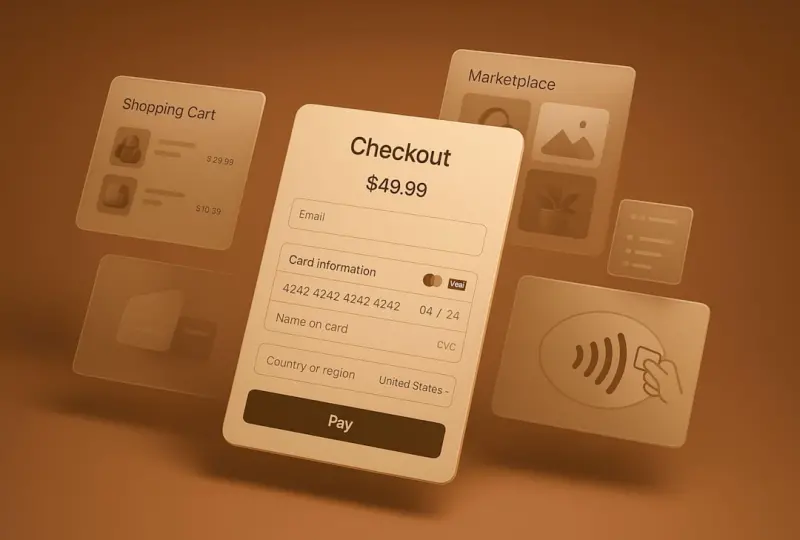
Why Progressive Web Apps Are Redefining Ecommerce Development
Progressive Web Apps combine web flexibility with native app speed, offering instant loads, offline browsing, and push notifications that lift ecommerce convers...Read More
0 Comments
Post Comment
You will need to Login or Register to comment on this post!