
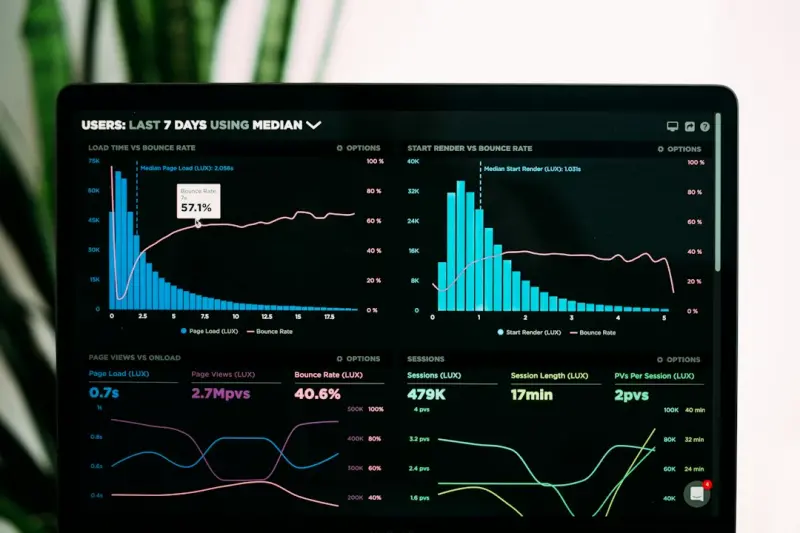
When I first cut my teeth on search engines, the mantra was simple: stuff keywords, get backlinks, hope for the best. Fast‑forward to today’s hyper‑competitive eCommerce landscape, and that playbook looks like a relic from a dinosaur era. The real differentiator now is how intelligently you can signal relevance to both crawlers and humans. In this piece I’ll walk you through a fresh, data‑driven SEO framework that goes beyond the usual “optimize title tags” checklist and taps into three powerful levers: semantic structured data, topic‑cluster architecture, and AI‑augmented content refinement.
Why Semantic Structured Data Is No Longer Optional
Search engines have evolved from keyword matchers into intent interpreters. They no longer need you to explicitly say “Buy red running shoes” to understand that a page is about a product. Instead, they parse the meaning behind your markup. That’s where schema.org comes into play. By embedding product, offer, and review schema directly into your HTML, you hand the search engine a clean, machine‑readable summary of what matters most to shoppers.
- Product schema – Defines the name, brand, SKU, and detailed specifications. When done right, your product can surface in rich snippets, price comparison widgets, and even voice assistants.
- Offer schema – Communicates price, availability, and any promotional discounts. This data fuels the “Buy Box” on SERPs, giving you a direct line to conversion‑ready traffic.
- Review schema – Highlights star ratings and user feedback. While we’ve already covered how UGC can boost SEO in How Customer Reviews and UGC Can Supercharge Your eCommerce SEO, the structured version ensures those reviews appear as rich results, dramatically increasing click‑through rates.
Implementing schema isn’t a one‑size‑fits‑all job. You need a semantic map that aligns with your product taxonomy. For instance, a “smart thermostat” should inherit both the “home appliance” and “IoT device” hierarchies in your markup. This layered approach helps Google’s Knowledge Graph place your product in the right context, making it more likely to appear in niche queries like “energy‑saving smart thermostat for apartments”.
Topic Clusters: Turning Your Catalog Into an Authority Hub
Most eCommerce sites treat each product page as an island. That’s a missed opportunity. By organizing content into topic clusters—core pillar pages surrounded by tightly linked, in‑depth sub‑pages—you signal depth of expertise to search engines. Think of a pillar page titled “Guide to Sustainable Outdoor Gear” that links out to individual product pages for recycled backpacks, biodegradable tents, and solar‑powered lanterns.
Here’s how to build a cluster that scales:
- Identify high‑intent seed topics. Use your internal search logs and Google Search Console to surface queries that already drive traffic, such as “how to choose a waterproof hiking boot”.
- Develop a pillar page that answers the broad question comprehensively—aim for 2,000+ words, include multimedia, and embed structured data where relevant.
- Create supporting content that dives into specific angles: material comparisons, sizing guides, and real‑world use cases. Each of these should link back to the pillar page and to each other where logical.
- Leverage internal linking strategically. Use descriptive anchor text (avoid generic “click here”) to reinforce keyword relevance across the cluster.
When executed well, topic clusters not only improve rankings but also keep shoppers on your site longer. They’re moving from “I’m just buying a product” to “I’m learning about a solution”. That shift translates to higher average order values and reduced bounce rates—signals that search engines love.
AI‑Augmented Content Audits: The Secret Sauce for Scaling Quality
Manually reviewing thousands of product descriptions for SEO health is a nightmare. This is where artificial intelligence steps in. Modern large‑language models (LLMs) can scan your catalog, flag thin content, suggest keyword variations, and even draft optimized copy that respects your brand voice.
Here’s a practical workflow I’ve refined over the years:
- Data extraction: Pull product titles, meta descriptions, and body copy into a spreadsheet. Include performance metrics like impressions and CTR from Search Console.
- LLM analysis: Feed the data into an LLM with a prompt that asks for a “SEO health score” based on keyword presence, readability, and schema completeness.
- Prioritization: Sort pages by the composite score. High‑traffic, low‑score pages become your quick wins; low‑traffic, low‑score pages can be retired or consolidated.
- Automated rewriting: Use the LLM to generate revised copy, then have a human editor review for brand consistency and factual accuracy.
This loop can be scheduled quarterly, ensuring your SEO stays fresh as product lines evolve. It also frees up your content team to focus on creative storytelling rather than repetitive optimization chores.
Marrying Structured Data with Topic Clusters
Now that you have both structured data and clusters in place, the next step is to make them talk to each other. Embed schema on both pillar and supporting pages, but tailor the type to the page’s role. Pillar pages benefit from FAQ schema (which can surface as rich results in the “People also ask” box), while product pages keep the Product and Offer schema.
When you interlink these pages, the crawlers can trace a clear semantic path: a user lands on a “how to choose a sustainable backpack” pillar, clicks a linked product, sees a rich snippet with price and rating, and ultimately converts. This journey aligns perfectly with Google’s “Helpful Content” guidelines, rewarding you with better rankings.
Performance Considerations: Edge, CDN, and Lazy Loading
Even the most perfectly marked‑up page will sputter if it loads slowly. Recent developments in edge computing (see our Edge Computing article) show that serving schema‑heavy pages from a geographically close edge node reduces latency and improves crawl efficiency.
Combine this with:
- CDN‑cached static assets—JavaScript and CSS that render schema markup should be minified and served from the edge.
- Lazy loading for images—Only load product images when they enter the viewport, keeping initial HTML lightweight for crawlers.
- HTTP/2 multiplexing—Allows simultaneous fetching of multiple resources, ensuring that schema scripts don’t block rendering.
When page speed signals align with robust schema, you give search engines a double‑whammy of relevance and performance—a recipe that consistently outperforms the “just add keywords” approach.
Measuring Success: KPI Dashboard for Semantic SEO
Finally, no strategy is complete without a feedback loop. Build a dashboard that tracks:
- Rich result impressions—Google Search Console now surfaces data on how often your structured snippets appear.
- Click‑through rate (CTR) lift—Compare CTR before and after schema implementation to quantify impact.
- Topic cluster traffic distribution—Watch the flow of users from pillar pages to product pages; a healthy funnel shows increasing internal navigation.
- Conversion rate per cluster—Not all traffic is equal; prioritize clusters that drive the highest revenue per visitor.
By visualizing these metrics, you can iterate quickly, prune underperforming clusters, and double‑down on high‑ROI topics. The data‑driven mindset is the same one behind Predictive Demand Engines, but applied to SEO instead of inventory.
Wrapping It All Up
Semantic SEO isn’t a single tactic; it’s an ecosystem of markup, content architecture, AI tooling, and performance engineering. When each piece is tuned to the others, you create a self‑reinforcing loop where crawlers understand your intent, users find richer information, and your site climbs the rankings without relying on cheap tricks.
If you’re still stuck in the “keyword stuffing” era, consider this your invitation to upgrade. Start with a single product page—add comprehensive schema, link it into a nascent topic cluster, and run it through an AI audit. Watch the metrics shift, then scale the process across your catalog. The payoff isn’t just higher rankings; it’s a more trustworthy, discoverable brand that turns browsers into loyal buyers.

Robert Mathews is a professional content marketer and freelancer for many SEO agencies. In his spare time he likes to play video games, get outdoors and enjoy time with his family and friends .
Related Posts

Crawl‑Budget Mastery: Getting Your Massive Product Catalog Indexed Faster
A deep dive into crawl‑budget strategies for massive eCommerce sites, covering catalog audits, URL... Read More

Semantic SEO: Unlocking Hidden Rankings for Ecommerce Product Pages
Semantic SEO goes beyond keywords, using structured data, content hubs, and intent-driven copy to he... Read More

Beyond Borders: A Tactical Guide to International SEO for eCommerce Brands
International SEO is essential for eCommerce success. This guide walks you through hreflang setup, l... Read More
Top Posts

Zero‑Click Search: Winning the New eCommerce SERP Battlefield
Zero‑click search now dominates the SERP, and eCommerce brands must adapt. This guide explains the mechanics of rich results, offers a step‑by‑step playbo...Read More

Payment Orchestration: The New Backbone of Ecommerce Platforms
Payment orchestration transforms checkout from a bottleneck into a growth engine by intelligently routing transactions, handling failures, and unifying analytic...Read More

From Monolith to Micro‑services: A Pragmatic Roadmap for Modern Ecommerce Websites
Discover a practical, incremental roadmap for breaking down a monolithic ecommerce platform into independent micro‑services, complete with technical foundatio...Read More

Low‑Code Ecommerce Development: Speed, Flexibility, and Scale
Low‑code and no‑code platforms are transforming ecommerce website development, enabling teams to launch faster, iterate continuously, and scale effortlessly...Read More
0 Comments
Post Comment
You will need to Login or Register to comment on this post!