
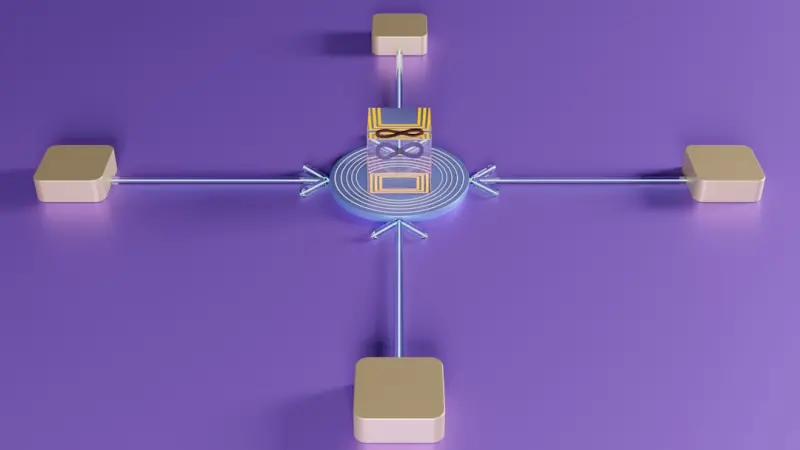
Why Real‑Time Business Logic Is the New Competitive Frontier
When I first started tinkering with headless commerce, the buzz was all about “faster front‑ends” and “pixel‑perfect omnichannel experiences.” Those are great outcomes, but they’re only the tip of the iceberg. In the high‑stakes B2B world, the real battlefield is the ability to make business decisions at the speed of a click. Pricing, inventory allocation, compliance checks, and contract‑specific discounts all need to react instantly to changing market conditions. If your storefront can’t keep up, you lose revenue faster than you can say “lost opportunity.”
Headless architecture gives you the freedom to push that logic out of the UI layer and into a dedicated, API‑first back end. In practice, this means you can swap out a pricing engine, introduce a new tax rule, or integrate a brand‑new ERP system without touching the front‑end code that your shoppers see. The result? A commerce platform that feels alive, constantly adapting to the nuances of each buyer, contract, and channel.
The Anatomy of a Modern Headless Stack
Think of a headless stack as a collection of interchangeable Lego bricks, each with a clear contract (the API) that tells the next brick how to behave. At a high level, you’ll typically see:
- Presentation Layer – React, Vue, Angular, or even a native mobile SDK. This is where the shopper interacts.
- API Gateway – A single entry point that routes requests to the appropriate micro‑service, enforces security, and handles throttling.
- Domain Services – Independent services for pricing, inventory, promotions, tax, and compliance. They talk to each other via events (Kafka, RabbitMQ) or REST/GraphQL.
- Core Commerce Engine – The data store for products, catalogs, orders, and customers. In a headless world, this is often a headless‑first SaaS core rather than a monolithic monolith.
- Integration Layer – Connectors to ERP, CRM, finance, and logistics. These are usually event‑driven, ensuring that your front end sees the latest data the instant it lands in the back office.
By decoupling these layers, you gain the ability to iterate on any piece without the dreaded “front‑end breakage” that haunts traditional platforms.
Event‑Driven Pricing Engines: From Static Lists to Adaptive Algorithms
In traditional ecommerce, pricing is a static table that updates once a day or when a merchandiser manually pushes a change. That works for B2C, but B2B buyers expect pricing that reflects volume, contract terms, credit limits, and even real‑time market fluctuations (think commodity pricing). An event‑driven pricing service can listen to:
- Inventory thresholds – raise prices when stock runs low.
- Supply‑chain alerts – lower prices when a supplier offers a discount.
- Customer behavior – offer instant rebates if a buyer adds a large order to the cart.
- Regulatory changes – automatically adjust tax rates across regions.
All of these triggers fire in milliseconds, and the result is sent back to the front end via a GraphQL query or a WebSocket subscription. The shopper sees a price that reflects the most current business logic, without ever refreshing the page.
Seamless ERP/CRM Sync: Turning Data Ownership Into a Tactical Weapon
One of the biggest pain points for B2B merchants is the disconnect between the commerce platform and the back‑office systems that actually own the data—ERPs, CRMs, and custom finance tools. When you own your data and expose it through well‑defined APIs, you can treat those systems as “source of truth” rather than an afterthought. This is why data ownership isn’t just a buzzword; it’s the foundation of a real‑time commerce experience.
Imagine a scenario where a sales rep updates a customer’s credit limit in the CRM. That change propagates instantly to the pricing service, which then enforces a new maximum order value for that buyer. The next time the buyer adds items to the cart, the system automatically warns them that they’re approaching the limit, offering a pre‑approved financing option. No manual “call the sales rep” step is required, and the buyer feels empowered rather than blocked.
Dynamic Content Delivery With Progressive Web Apps
While our focus is on business logic, the presentation layer still matters. Progressive Web Apps (PWAs) have emerged as the go‑to way to deliver lightning‑fast, app‑like experiences without the overhead of native development. When paired with a headless back end, PWAs can cache API responses, pre‑fetch pricing data, and even run pricing calculations offline—synchronizing with the server as soon as connectivity is restored. This hybrid approach ensures that B2B buyers in low‑bandwidth environments still get a seamless experience, and it reinforces the real‑time promises of your headless architecture.
Testing and Experimentation at Scale
Because each business rule lives in its own micro‑service, you can A/B test at the service level. Want to see how a new “volume‑based discount curve” impacts order size? Deploy the new pricing logic to a canary service, route 5% of traffic through it, and monitor the results in real time. No need to spin up a separate storefront or risk breaking the UI for all customers.
Feature flags become a powerful ally. You can toggle a new tax rule on for a specific region, or enable a new compliance check only for regulated industries. By keeping the front end agnostic to these changes, you avoid the dreaded “feature freeze” that slows down innovation on traditional platforms.
Getting Started Without a Full Rewrite
If the idea of ripping out your existing storefront sends shivers down your spine, you’re not alone. The beauty of headless is that you can adopt it incrementally:
- Identify a high‑impact service—pricing, inventory, or checkout are usually good candidates.
- Expose its API using GraphQL or REST, and replace the corresponding calls in your front end.
- Introduce an API gateway to unify routing and security without touching the underlying services.
- Gradually migrate UI components to a modern framework (React, Vue, etc.) that consumes the new APIs.
- Monitor and iterate using observability tools to ensure latency stays low and business rules behave as expected.
By focusing on one service at a time, you can reap the benefits of real‑time logic without a massive, risky project.
Pitfalls to Watch
Headless isn’t a silver bullet. Here are three common traps:
- API Sprawl – Without governance, you’ll end up with dozens of overlapping endpoints. Adopt an API catalog and enforce versioning.
- Latency Blindness – Real‑time logic is only valuable if it’s delivered quickly. Use edge caching strategically, but keep critical pricing calculations close to the data source.
- Security Overhead – Decoupling surfaces more attack vectors. Implement OAuth2, scopes, and rate limiting at the gateway level.
Address these early, and your headless journey will stay on the fast lane.
Future‑Proofing Your Commerce Engine
The next wave of headless innovation will revolve around AI‑enhanced decision engines and composable marketplaces. When your architecture already treats business logic as interchangeable services, you’ll be ready to plug in a machine‑learning model that predicts optimal pricing, or a marketplace orchestrator that aggregates product feeds from multiple vendors—all without rewriting the front end.
In short, headless commerce isn’t just about a slick UI; it’s the scaffolding that lets your business logic evolve as fast as the market demands. By embracing an API‑first, event‑driven approach, you turn every rule change into a deploy‑once, instant‑effect operation, giving you the agility to win in the B2B arena.

Brad Hays is a freelance writer known for his versatile skill set and ability to craft compelling content across a wide range of industries.
Related Posts

Why Headless Ecommerce Is the Secret Weapon for Faster Seasonal Campaigns
Headless ecommerce decouples the storefront from the commerce engine, giving marketing teams the pow... Read More

Turning Headless Architecture into a Playground for Continuous Experimentation
Headless ecommerce isn’t just about flexibility—it’s a catalyst for a culture of rapid, dataâ€... Read More

Unleashing the Modular Power of Headless Commerce
Headless commerce isn’t a buzzword—it’s a modular framework that lets brands ship experiences ... Read More
Top Posts
Why Progressive Web Apps Are Redefining Ecommerce Development
Progressive Web Apps combine web flexibility with native app speed, offering instant loads, offline browsing, and push notifications that lift ecommerce convers...Read More

Seeing is Believing: How Visual Search Is Redefining eCommerce SEO
A deep dive into visual search SEO, covering image metadata, AI tagging, user‑generated content, and future‑proofing tactics that help online retailers capt...Read More
Why Kubernetes Is the Secret Weapon for Self‑Hosted Ecommerce
Kubernetes transforms self‑hosted ecommerce by providing self‑healing, auto‑scaling, and cost‑effective infrastructure, enabling merchants to maintain c...Read More

Micro‑Interactions That Turn Browsers Into Buyers
Micro‑interactions—tiny animations and feedback loops—can dramatically improve ecommerce conversion by reducing friction, building confidence, and delight...Read More
0 Comments
Post Comment
You will need to Login or Register to comment on this post!