
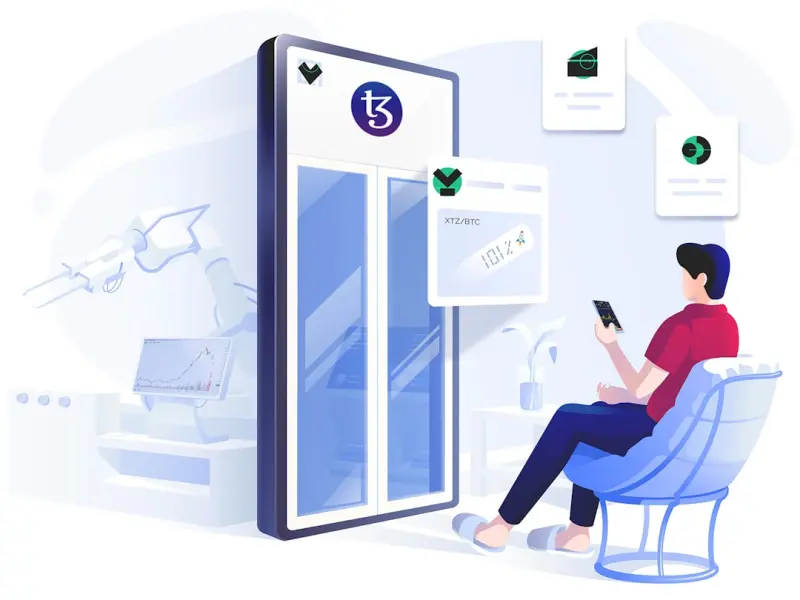
When you hear “headless ecommerce,” the first thing that usually comes to mind is a technical architecture diagram full of APIs and micro‑services. That’s a fair starting point, but it’s also the tip of the iceberg. In practice, a truly decoupled front‑end can become the secret sauce for delivering hyper‑personalized, omnichannel experiences that feel handcrafted for every buyer—no matter how fragmented their journey.
Why “headless” is no longer a buzzword, but a business imperative
The ecommerce landscape has moved past the era where a monolithic platform could reliably support a brand’s growth. Today’s buyers hop between devices, social feeds, messaging apps, and even voice assistants within a single purchase cycle. If your checkout page still lives on the same monolith that powers your product catalog, you’re forced to compromise on speed, design, and the very experiences that differentiate you from the competition.
Decoupling the presentation layer from the commerce engine does three things simultaneously:
- It gives designers the freedom to innovate without waiting on backend releases. A new hero banner, an interactive product configurator, or a shoppable Instagram story can be rolled out in days, not months.
- It lets marketers experiment with content at the speed of a click. Personalization rules, dynamic pricing displays, and localized messaging become simple configuration changes rather than code rewrites.
- It creates a single source of truth for product data that can be consumed anywhere. Whether it’s a native iOS app, a progressive web app, or a third‑party marketplace, every touchpoint speaks the same language.
The result? A seamless, brand‑consistent experience that feels bespoke for each shopper.
From “one‑size‑fits‑all” to “right‑size‑for‑each” – the personalization loop
Personalization is often reduced to “recommend this product based on past purchases.” In a headless setup, however, you can stitch together signals from multiple channels—website behavior, email engagement, CRM notes, even offline sales—to craft a truly holistic view of the customer.
Imagine a buyer who first discovers a product on a social ad, later watches a demo video on YouTube, and finally adds the item to a cart on a mobile app. With a unified API gateway, each of those interactions can be logged in real time, allowing your recommendation engine to serve a “complete‑the‑look” bundle that reflects the buyer’s cross‑channel intent.
Because the front‑end is independent, you can render those bundles in wildly different ways: a carousel on the web, a swipe‑able card stack in a native app, or even a chatbot prompt that says, “I see you’re interested in X – would you like to add Y?” The possibilities expand as fast as your data pipelines.
Orchestrating the experience: the role of the API layer
The API layer is the nervous system of a headless stack. It must be robust, secure, and fast enough to handle bursts of traffic from multiple origins. But beyond raw performance, the design of your APIs dictates how easily you can experiment.
Think of each endpoint as a modular Lego piece. One endpoint might fetch product attributes, another might deliver pricing tiers, while a third provides inventory status across warehouses. When you combine these pieces in new configurations, you can create fresh experiences without touching the underlying commerce engine.
To avoid reinventing the wheel, many teams adopt an orchestrator—a lightweight service that aggregates data from several micro‑services and presents a single, optimized response to the front‑end. This pattern reduces latency and simplifies front‑end development, letting engineers focus on UI/UX rather than data plumbing.
For those who need a deeper dive into the technical blueprint of high‑performance commerce sites, our high‑performance ecommerce blueprint provides a step‑by‑step guide to building a resilient API layer.
Content as commerce: marrying CMS and product data
In a headless world, the line between content and product blurs. A brand story, a how‑to guide, and a product description can all be served through the same API, allowing marketers to weave commerce directly into editorial experiences.
For example, a travel gear retailer might publish a blog post about “Packing for a Mountain Expedition.” Within that article, dynamic product cards can pull real‑time inventory and pricing, turning passive reading into an active shopping moment. Because the CMS is separate from the catalog, you can manage content updates without risking catalog integrity.
This approach also unlocks regional storytelling. A single content model can surface different product assortments, currency formats, and cultural nuances based on the visitor’s locale—all without duplicating the entire site.
Speed wins: performance gains that translate to revenue
Every extra second of load time can shave a percentage point off conversion rates. Decoupled front‑ends typically serve lightweight JavaScript bundles and static assets from a CDN, while the backend focuses on business logic. The net effect is dramatically faster page loads, especially on mobile devices where bandwidth is at a premium.
Moreover, because the front‑end can be pre‑rendered (using static site generation or server‑side rendering), you can achieve near‑instant first‑paint times. Users get an immediate visual, and the JavaScript “hydrates” the page in the background, fetching live data only where it matters.
Future‑proofing with modularity
Technology moves fast. A new front‑end framework might gain traction next quarter, or a new payment method could become the industry standard. With a headless architecture, you can swap out the presentation layer—or even the commerce engine—without rebuilding the entire shop.
Consider the scenario where a brand decides to launch a voice‑first shopping experience. Because the commerce logic is already exposed via APIs, a new voice skill can be built on top of the existing stack with minimal effort. The same holds true for emerging channels like AR/VR showrooms, where product data can be streamed directly into a 3‑D environment.
Integrating financial services without the friction
One of the most compelling opportunities for headless commerce is the seamless integration of financial services—think “buy now, pay later,” instant credit checks, or embedded insurance. By exposing these capabilities through APIs, you can embed financing options directly into the checkout flow, or even earlier in the funnel as “price‑as‑you‑shop” sliders.
When the financing logic lives as a separate micro‑service, you retain full control over the user experience while still complying with regulatory requirements. For a practical roadmap on adding financial capabilities, see our guide on integrated financial services.
Measuring success: metrics that matter
Transitioning to a headless stack isn’t just a technical project; it’s a strategic initiative that should be measured against clear KPIs:
- Time‑to‑market for new experiences. Track how many days it takes to launch a new front‑end feature from concept to production.
- Conversion lift from personalization. Compare conversion rates on pages that pull in cross‑channel signals versus static pages.
- Page load performance. Monitor average first‑contentful‑paint (FCP) and time‑to‑interactive (TTI) across devices.
- Customer satisfaction (CSAT) and Net Promoter Score (NPS). A smoother, more relevant experience should reflect in higher scores.
Regularly reviewing these metrics ensures that the headless investment translates into tangible business outcomes.
Common pitfalls and how to avoid them
While the benefits are compelling, teams often stumble on a few avoidable traps:
- Over‑engineering the API surface. Resist the urge to expose every possible data point. Start with core endpoints and expand based on real needs.
- Neglecting security in the API layer. Implement robust authentication (OAuth 2.0 or JWT) and rate limiting to protect against abuse.
- Ignoring content governance. Without a clear content model, editors can create inconsistent experiences. Define schemas early and enforce them through the CMS.
- Under‑estimating the operational overhead. Decoupled systems require monitoring across multiple services. Invest in observability tools that aggregate logs, metrics, and traces.
Real‑world illustration: a B2B manufacturer’s journey
A mid‑size industrial equipment manufacturer recently migrated from a legacy monolith to a decoupled stack. Their sales cycles are long, involving multiple stakeholders, and they needed a way to present complex configurators without bogging down the core system.
By exposing product attributes and pricing through a flexible API, they built a custom configurator that could be embedded on partner sites, inside email newsletters, and even on a sales‑force mobile app. The configurator fetched real‑time availability and suggested accessories based on the selected configuration—cutting the average quote generation time from 48 hours to under 4 hours.
The result was a 27 % increase in qualified leads and a noticeable uplift in customer satisfaction scores, all while the backend remained stable and secure.
Getting started: a pragmatic roadmap
- Assess your current stack. Identify which parts of your commerce platform are tightly coupled to the front‑end.
- Define the API contract. List the data entities (products, categories, pricing, inventory) and the operations you need (read, write, search).
- Choose a front‑end framework. React, Vue, Svelte, or even a static site generator—pick what aligns with your team’s expertise.
- Build an orchestrator. Aggregate data from the commerce engine, CMS, and any third‑party services into a single, performant response.
- Iterate with a pilot. Launch a new landing page or a localized storefront using the headless stack while keeping the legacy site as a fallback.
- Measure, learn, and expand. Use the metrics above to validate impact, then progressively migrate additional touchpoints.
Remember, you don’t need to “go all‑in” from day one. A phased approach lets you reap early wins while mitigating risk.
Conclusion: the competitive edge of a decoupled experience
Headless ecommerce isn’t just a technical novelty; it’s a strategic lever that empowers brands to deliver moments that feel personal, immediate, and frictionless. By unshackling the front‑end, you unlock a playground for designers, marketers, and developers to collaborate on experiences that adapt to every channel and every shopper.
The payoff is measurable: faster load times, higher conversion rates, and a future‑ready architecture that can evolve alongside emerging technologies. If your goal is to stand out in a crowded marketplace, the time to embrace a truly decoupled commerce experience is now.

Robert Mathews is a professional content marketer and freelancer for many SEO agencies. In his spare time he likes to play video games, get outdoors and enjoy time with his family and friends .
Related Posts
How Headless Architecture Unlocks Real‑Time Business Logic for B2B Sellers
Headless commerce goes beyond faster front‑ends; it empowers B2B merchants to run real‑time pric... Read More

Headless Ecommerce: Powering Hyper‑Local Retail Experiences
Headless ecommerce lets brands create micro‑storefronts tailored to each neighborhood, integrating... Read More

Why Headless Is the Missing Link for B2B Subscription Commerce
Headless commerce decouples the UI from the backend, giving B2B SaaS companies the agility to launch... Read More
Top Posts
Low‑Code Integration Hubs: The Secret Sauce for Scalable Ecommerce Platforms
Low‑code integration hubs transform ecommerce platforms from rigid monoliths into agile ecosystems, letting non‑technical teams build workflows, sync data, ...Read More

Why B2B Sellers Need a Digital Community Hub
A digital community hub transforms B2B ecommerce from a transactional experience into a collaborative partnership, driving higher LTV, faster sales cycles, and ...Read More

Edge‑First Ecommerce Development: Bringing the Store Closer to the Customer
Learn why moving compute and UI components to the edge transforms online stores—offering lightning‑fast load times, real‑time personalization, and a scala...Read More

Blockchain Meets B2B: Rethinking Payments, Trust, and Growth
This post shows how blockchain can transform the B2B payment lifecycle, offering immutable records, automated settlements, and token‑based incentives—all wi...Read More
0 Comments
Post Comment
You will need to Login or Register to comment on this post!